2026-10-19 · Ryan Keller
Recycling And Sorting Guidelines For Phoenix Dumpster Use
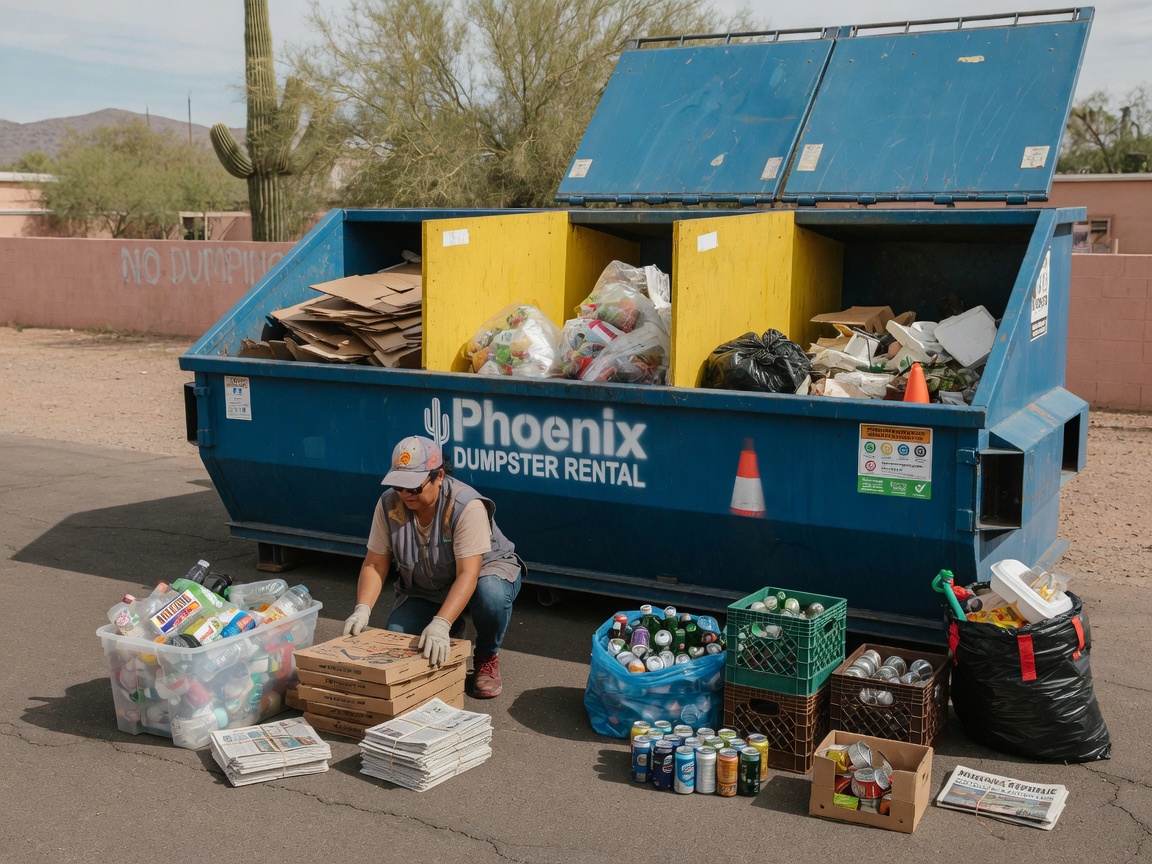
Phoenix dumpster users separate recyclables like paper, cardboard, plastics numbered 1-7, glass, and metals from non-recyclable waste at the start of every project. This approach keeps loads clean for Maricopa County facilities and avoids rejection at transfer stations. Hot desert summers accelerate decomposition of food waste and organics, so crews in neighborhoods such as Arcadia and Biltmore often bag those items separately to reduce odors and pest issues during the rental period.
Sorting Recyclables Before Loading
Begin by setting up three piles on site: clean recyclables, general trash, and prohibited items. Cardboard boxes from deliveries flatten easily in the dry climate of Camelback East and Maryvale, taking less space than in humid regions. Rinse plastic containers lightly to remove residue, since extreme summer heat can bake food particles onto surfaces and create odors that draw wildlife near Papago Park homes. Metals such as aluminum siding or copper pipe go into the recycle pile without mixing with treated lumber, which belongs in the trash stream. Place these groups into the dumpster in layers, with heavier items at the bottom to maintain stability on uneven lots common in South Mountain.
Handling Construction Materials in Phoenix
Construction jobs in Ahwatukee and near Chase Field generate large volumes of drywall, wood, and concrete that require separation from household recyclables. Clean wood scraps without paint or stain qualify for recycling at certain Maricopa County yards, while painted or pressure-treated pieces must stay in the general waste section. Concrete and masonry rubble often need their own load because of weight limits, especially when crews work during peak summer temperatures above 110 degrees. Link to detailed options at legal disposal options for construction debris in Phoenix before mixing loads on a construction dumpster rental.
Residential Projects and Common Mistakes
Homeowners in Biltmore and Camelback East frequently overlook yard waste such as palm fronds and cactus trimmings, which count as green waste rather than trash in many Phoenix routes. Bag these separately and confirm with the rental company whether they accept them in the same container. Avoid placing electronics, batteries, or paint cans in any dumpster, as these require dedicated drop-off sites around the city. Check placement rules first at understanding Phoenix city rules for dumpster placement to prevent street blocking in dense areas like Maryvale. A residential dumpster rental works best when sorted loads stay under the 10-ton limit typical for 20-yard containers.
Seasonal Adjustments for Desert Conditions
Summer heat in Phoenix and nearby Tempe and Mesa dries out loads quickly, reducing liquid leachate but increasing fire risk from oily rags or batteries left in direct sun. Cover the dumpster with a tarp during non-use hours to keep lightweight recyclables from blowing into streets near Desert Botanical Garden. Winter brings occasional rain that can turn paper into mush, so store cardboard indoors until loading day. Crews adjust by scheduling pickups earlier in the morning before temperatures rise, ensuring materials remain separated throughout the rental window from 8am to 6pm weekdays.